Electric vs. Internal Combustion Forklifts: A Complete Buyers Guide for Canadian Operations
Choosing between electric and internal combustion forklifts is an important decision for any operation. The right fit depends on a range of factors that play out over years of ownership, from daily operating costs to regulatory compliance and long-term fleet flexibility.
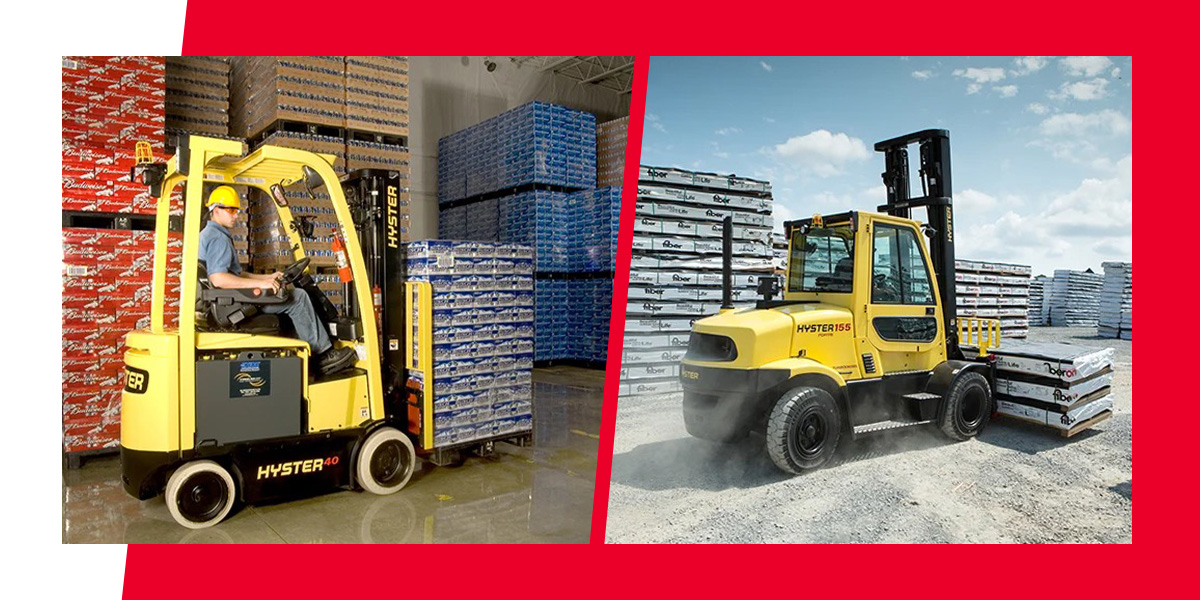
Electric forklifts offer zero emissions and lower per-hour costs, making them the clear winner for climate-controlled warehouses. Internal combustion models deliver superior outdoor performance and eliminate charging downtime, serving operations in rough terrain or extreme cold. The best power source depends on your environment, shift patterns, application requirements and total cost picture. This guide breaks down the comparison to help you make the right call for your operation.
Understanding Your Forklift Power Options
There are four main forklift power types to consider, each suited to different applications. Understanding the distinctions helps you better match equipment to your environment:
- Electric battery-powered forklifts: These units run on either lithium-ion or lead-acid batteries. Lithium-ion models support opportunity charging during breaks and offer longer operational lifespans. Lead-acid batteries carry a lower up-front cost but require regular watering and dedicated charging windows.
- LPG or propane forklifts: Propane-powered equipment is the most common option for operations that span indoor and outdoor environments. Propane offers fast refueling and consistent power output, though adequate ventilation is required to manage emissions with indoor use.
- Diesel forklifts: Built for outdoor, heavy-duty applications, diesel models deliver higher lift capacities and rugged performance on challenging terrain.
- Dual-fuel forklifts: Dual-fuel configurations allow operators to switch between gasoline and LPG, offering operational flexibility when fuel availability or cost fluctuates.
The Case for Electric Forklifts
Electric forklifts have become the preferred choice for warehouse and distribution operations across Canada as more operations are working towards sustainability goals. When evaluating an electric vs. a propane forklift for indoor applications, the differences in emissions and cost are significant:
- Zero emissions: Electric models produce no exhaust, a critical factor for maintaining indoor air quality and meeting provincial regulatory requirements across Canada.
- Lower per-hour operating cost: Electric models often deliver substantial per-hour savings compared with internal combustion models.
- Quieter operation: Battery-powered equipment operates significantly more quietly than combustion engines, reducing noise exposure in multi-shift and cold-storage environments.
- Reduced maintenance burden: Electric forklifts have fewer moving parts, eliminating the need for oil changes, spark plug replacements and fuel system servicing.
- Lithium-ion advantages: Adoption of lithium-ion forklift batteries in Canada is growing rapidly, and it is easy to see why. These batteries support opportunity charging during breaks, deliver longer lifespans and eliminate the watering and equalization routines required by lead-acid technology.
Electric models carry trade-offs worth considering. For instance, the cost of an electric forklift in Canada often runs higher than that of a comparable internal combustion forklift, and charging infrastructure requires up-front investment in electrical capacity, load management systems and code-compliant installations.
The Case for Internal Combustion Forklifts
Internal combustion equipment excels in specific applications where electric models may face practical limitations:
- Superior outdoor and rough-terrain performance: Gravel yards, lumber operations and construction sites demand equipment that handles uneven surfaces, mud and debris. Internal combustion models deliver sufficient power and traction in such environments.
- Zero downtime for charging: Refuelling takes minutes, allowing operators to return to work immediately. For operations running extended shifts, this eliminates the productivity impact of waiting for battery charging cycles.
- Better cold-weather performance: Extreme cold significantly affects battery performance. Internal combustion engines operate reliably in subzero temperatures, maintaining full power output, while electric models may experience reduced capacity.
- Higher lift capacities: Heavy industrial applications often require the torque and capacity provided by diesel or propane engines. Electric options may not meet the demands of some specialized lifting tasks.
- Lower purchase price: Many IC configurations cost less to purchase initially than comparable electric models, reducing capital expenditure.
These advantages come with higher long-term operating expenses; fuel and maintenance costs add up over the equipment’s lifespan.
Running the Numbers on Total Cost of Ownership (TCO)
Evaluating the total cost of ownership of an electric forklift versus internal combustion alternatives requires looking beyond the sticker price to understand how operating expenses accumulate over the equipment's life cycle.
Consider these factors when building your TCO analysis.
Purchase Price vs. Operational Costs

Purchase price or lease cost establishes your initial investment, but fuel and energy expenses dominate long-term operating budgets. Electric forklift cost calculations should account for kilowatt-hour pricing in your region, while IC models require fuel cost projections that reflect propane or diesel market volatility. The BC Hydro cost calculator provides a free tool to compare electric, diesel and propane operating costs based on your usage patterns and local electricity rates.
Maintenance Frequency
Maintenance frequency varies significantly between power types. Electric models eliminate engine servicing, oil changes and spark plug replacements, reducing both parts costs and labour hours. IC equipment requires regular fuel system maintenance, filter changes and engine servicing.
Operator Productivity
Operator productivity also factors into TCO. Charging downtime affects electric forklift utilization, though lithium-ion opportunity charging substantially narrows this gap. IC refuelling takes minutes, maximizing available operating hours.
It is best to contact a professional who can model scenarios specific to your operation for a personalized TCO analysis that accounts for your shift patterns and application requirements.
Matching Power Type to Your Application
The right power source depends on where and how you operate:
- Climate-controlled warehouse operations: For facilities operating primarily indoors with consistent temperatures and smooth concrete floors, electric power typically delivers the best combination of emissions compliance, operating cost and worker comfort.
- Multi-shift operations with limited charge time: Operations running consecutive shifts without downtime for charging should evaluate either internal combustion equipment or lithium-ion electric models with opportunity charging infrastructure.
- Outdoor yard work and rough terrain: Gravel surfaces, uneven ground and outdoor material handling favour IC forklifts. LPG and diesel configurations deliver the power and durability needed for challenging operating conditions.
- Cold storage and freezer environments: Both power types present considerations in extreme cold. Battery performance degrades in subzero temperatures, while IC equipment maintains output but may require additional cold-start provisions. Connect with an expert to identify the configuration that matches your temperature setpoints.
- Tightening emissions regulations: As provincial and federal emissions standards continue to evolve, operations subject to industrial carbon pricing or indoor air quality legislation should monitor evolving requirements and get ahead of compliance timelines to position their fleet for a smooth transition.
What to Know Before Transitioning Your Fleet
Switching from internal combustion to electric power requires infrastructure planning beyond the equipment purchase. Single-phase power suffices for small operations, while multi-unit fleets typically require three-phase installations with load management capabilities.
Lead-acid charging stations must comply with the National Fire Code of Canada ventilation requirements due to hydrogen gas generation during charging cycles. Lithium-ion batteries eliminate hydrogen concerns but still require certified equipment and proper electrical design. Consult licensed electricians regarding electrical capacity and charger efficiency considerations.
Operator training protocols must address safe battery handling and charging procedures. Plan phased fleet transitions rather than converting your entire operation simultaneously. Piloting electric units allows you to validate performance and train operators before full conversion. Rental equipment provides a low-risk testing approach.
Ready to Move Forward? Request a Fleet Assessment from Wajax
If you are evaluating your fleet or planning a transition, the Wajax team can help. Our experts bring deep technical knowledge across material handling equipment, parts availability and service infrastructure. We work with operations across Canada to match the right equipment to the right application.
Explore our full selection of new electric and internal combustion forklifts, or contact us today to request a fleet assessment and personalized recommendation.